🚨On the road 2/16/2026: Traverse City, MI - Grand Rapids, MI - Lansing, MI 🚨
Get on route! Save on service!
About ASME B30.20 Standards
Learn more about the ASME B30.20 standards and the importance in ensuring safety and reliability in lifting equipment and operations.
🌐ASME B30.20 is a key safety standard that establishes guidelines for below-the-hook lifting devices, a category that includes lifting magnets. The standard covers the entire lifecycle of these devices, from their initial marking and construction to their installation, inspection, testing, maintenance, and operation. The primary purpose of these requirements is to prevent injuries to workers and protect property by ensuring that lifting magnets are designed, used, and maintained with a focus on safety.
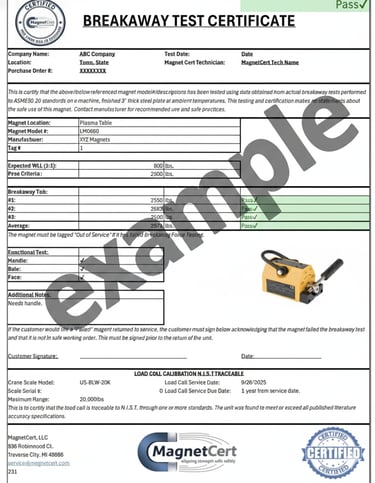
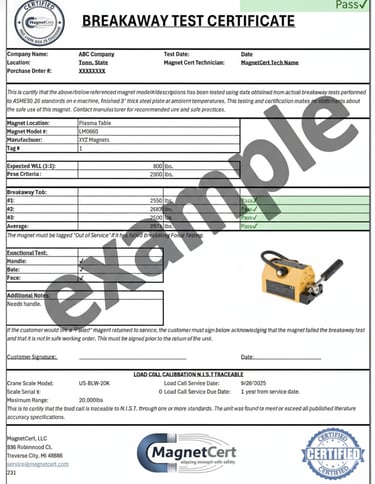
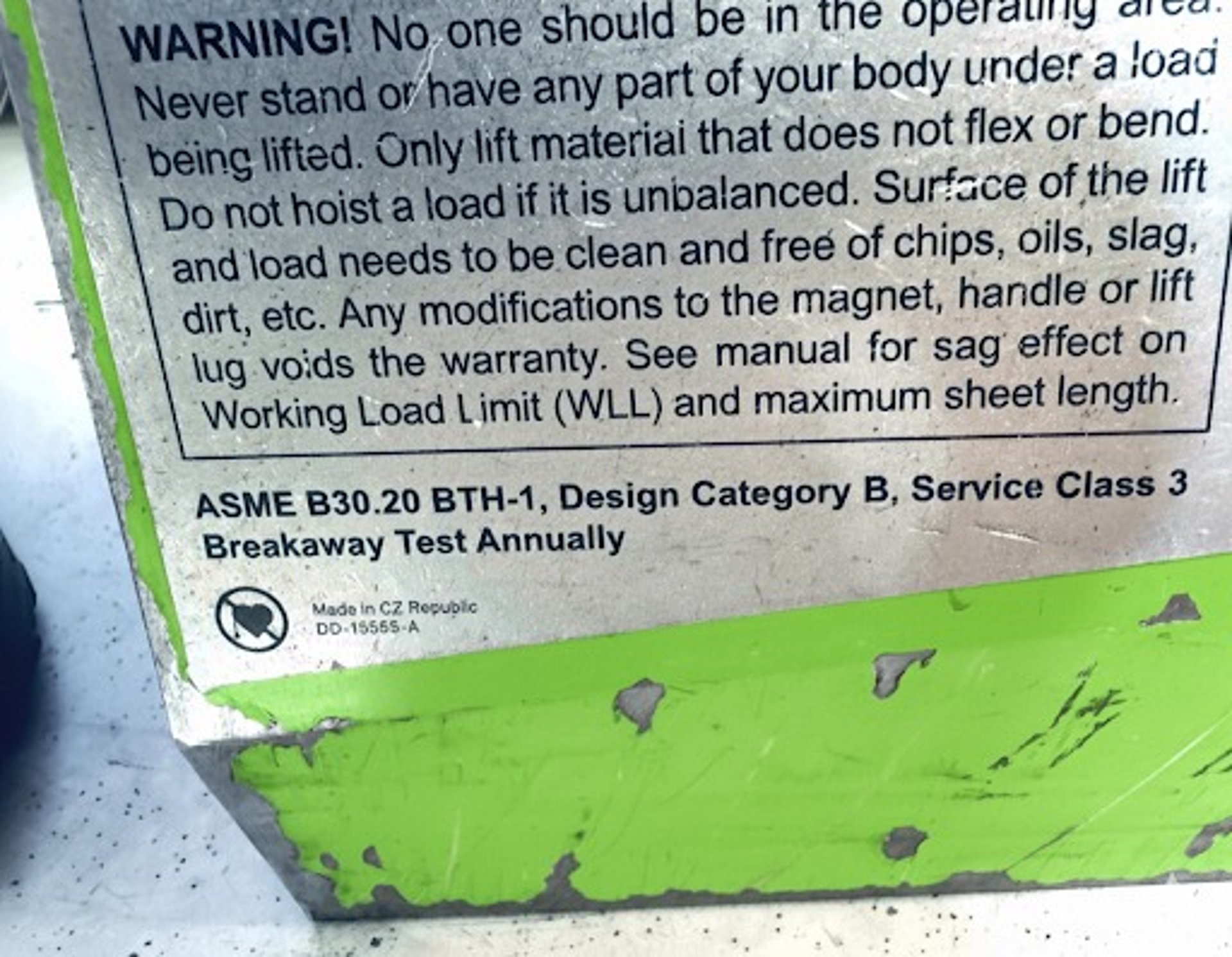
The standard mandates specific requirements for lifting magnets, particularly regarding their rated load and testing. For example, the rated load must be permanently and legibly marked on the magnet. This rated load is determined by a breakaway force test, which measures the force required to pull the magnet away from a test plate. The standard specifies a design factor: for permanent magnets, the rated load must be no more than 33% of the breakaway force, and for electromagnets, it must be no more than 50%. These safety factors ensure the magnet's capacity is significantly greater than the load it is intended to lift, providing a critical margin of safety.
ASME B30.20 also outlines a comprehensive inspection program for lifting magnets. This includes frequent visual examinations by operators and more detailed, periodic inspections with recorded findings. The frequency of these inspections depends on the service level—whether it's normal, heavy, or severe. Critical aspects of the inspection include checking for a smooth, foreign-material-free lifting face, ensuring the control handle and any indicators are working correctly, and looking for any signs of heat damage, cracks, or deformation. Any condition that could pose a hazard, such as a damaged nameplate or worn wiring, requires the magnet to be immediately removed from service.
What ASME B30.20 Covers:
The standard addresses lifting magnets and other below-the-hook lifting devices, defining them and establishing rules for their safe use.
Types of Magnets: It covers various magnetic lifters, including permanent magnets, power-lift magnets, and switch-off lifting magnets used for flat and round steel items, which are designed to be lifted safely. Safety rating of 3:1 in most cases.
Testing: The standard details requirements for proof testing and load testing, ensuring magnets can hold a certain capacity.
Inspection & Maintenance: It sets frequencies for inspections, which vary depending on the service type (normal, heavy, severe), and outlines what conditions warrant removal from service.
Key Aspects of the Standard:
Safety & Liability: Following ASME B30.20 safeguards against workplace accidents, reducing legal issues and potential fines for non-compliance.
Operator & Owner Responsibilities: The standard defines the responsibilities of owners and operators to ensure the equipment is used correctly and maintained according to standards.
Qualified Person: It requires a qualified person to be involved in approving testing methods and recommending maintenance actions.
Testing Procedures: For lifting magnets, the standard specifies that the test must be performed on a low-carbon steel plate with a specific surface finish and flatness.
Service Conditions: Periodic inspection intervals are set at yearly for normal service, semiannually for heavy service, and quarterly for severe service.
Terminology clarification: In the industry, this testing is often referred to as Magnet Calibration. For clarification, the magnets cannot be calibrated after testing. This is a pass/fail test. Repairs can be performed after the testing, but often times it's more economical to replace the magnet.
ASME B30.20-2025 standard does not explicitly mandate that testing must be performed by a "Third Party" (an outside company). However, it does require that testing and inspections be performed by a "Qualified Person" and that certain records be maintained.
In the world of ASME, there is a big difference between a "Designated Person" (someone assigned by the employer) and a "Qualified Person".
1. The "Qualified Person" Requirement
According to the standard, the individual performing the breakaway test must have:
A recognized degree or professional standing.
Extensive knowledge, training, and experience in lifting magnets.
The ability to solve problems related to the subject matter and the work.
Can this be an internal employee? Yes, if your company has the specialized equipment (like a NIST-traceable test stand) and an engineer or technician who meets the "Qualified" definition. However, most facilities lack the specific pull-test stands required to safely measure thousands of pounds of breakaway force, which is why 3rd-party certification is the industry norm.
Why It Matters:
By adhering to the ASME B30.20 standard, businesses demonstrate due diligence in maintaining lifting equipment, which can be critical in legal disputes following accidents and helps maintain the integrity and safety of the magnets over time.
💡2026 UPDATE: There are new ASME B30.20 regulations:
With the ASME B30.20-2025 edition being the latest update, revising the 2021 standard and focusing on clarified lifting devices, updated load testing, and new figures for load-containing lifters, reinforcing requirements for proper marking, inspection (visual & frequent), breakaway force testing (3:1 safety factor), and operation of lifting magnets, with compliance being a key OSHA mandate for workplace safety.
Key Updates in ASME B30.20-2025 (and general B30.20 requirements):
New Edition: The latest standard is ASME B30.20-2025, effective in late 2025/early 2026, updating the 2021 version.
Load Testing & Breakaway Force: Magnets must pass rigorous breakaway force tests, with rated loads being a fraction (e.g., <33% for permanent, <50% for electromagnets) of this force, demonstrating a minimum 3:1 design factor.
Marking: Clear, permanent marking is required, including manufacturer, serial number, weight (if >100 lbs), rated load, voltage/amps (for electric), and ASME BTH-1 design/service class.
Inspection: Frequent visual inspections (before each shift for certain issues) are mandatory, along with periodic inspections based on service level (normal, heavy, severe).
BTH-1 Design: Design must align with ASME BTH-1, specifying design categories and service classes, crucial for magnet selection and safety.
Scope: The standard covers various below-the-hook devices, including various types of lifting magnets (remote, close proximity, power-lift, electro-permanent).
Key Updates & Your Preventative Maintenance
Reinforced Breakaway Force Testing: The 2025 standard clarifies the crucial 3:1 safety factor for lifting magnets. This means your rated loads must be significantly less than the magnet's actual breakaway force. Regular, documented breakaway force testing isn't just a compliance step; it's a vital preventative measure that ensures your magnets are operating far within their safe limits.
Mandatory Inspections (Visual & Frequent): The emphasis on both "frequent visual inspections" (before each shift for specific issues) and "periodic inspections" based on service level underscores the core of preventative maintenance. This isn't about waiting for a failure; it’s about proactive detection of wear, damage, or degradation before it becomes a hazard. A well-maintained magnet, like the clean and shiny one above, is a safe magnet.
Clearer Marking Requirements: Proper, permanent marking including rated load, serial number, and voltage (for electric) is critical. This helps ensure that the right magnet is used for the right job and that its specifications are always visible. Incorporating this into your preventative checks means verifying markings are legible and accurate.
The standard for below-the-hook lifting devices has changed. With the release of ASME B30.20-2025, the industry is moving toward even stricter oversight of lifting magnets. Whether you use permanent, electro-permanent, or electromagnets, these updates directly affect your daily operations and your annual safety audits.
Why Preventative Maintenance is No Longer Optional The 2025 edition doubles down on the 3:1 safety factor for breakaway force. A magnet that "looks fine" may no longer meet the rigorous testing requirements of the new standard. This is where Preventative Maintenance (PM) becomes your most valuable tool. A clean, shiny, well-maintained magnet isn't just about aesthetics—it's about ensuring the surface contact is perfect to achieve that mandatory breakaway force.
What You Need to Check Now:
Marking & Identification: Is your serial number and rated load still legible?
Inspection Intervals: Are you performing "Frequent" visual checks every shift?
Testing: When was the last time you documented a breakaway force test?
By staying ahead of the ASME B30.20-2025 requirements, you aren't just checking a box for OSHA; you are ensuring that your equipment—and your people—stay safe.
Why It Matters:
OSHA Compliance: While ASME standards aren't law, OSHA recognizes them as accepted industry practice, making adherence crucial for demonstrating due diligence and avoiding liability.
Safety: Following these standards ensures proper design, testing, and maintenance to prevent accidents, especially regarding power failures in electromagnets (requiring backup power/alarms).
In summary, recent updates to ASME B30.20 continue to emphasize strict testing, marking, and inspection protocols for lifting magnets, with the 2025 edition bringing further clarifications and updates to ensure maximum workplace safety.
ASME B30.20 Standards FAQ
What are ASME B30.20 standards?
ASME B30.20 standards provide guidelines for the design, construction, and maintenance of lifting devices.
Who needs to follow these standards?
These standards are essential for manufacturers, operators, and users of lifting equipment to ensure safety and compliance.
How are these standards developed?
The standards are developed through collaboration among industry experts, regulatory bodies, and stakeholders to ensure comprehensive safety measures.
Are there updates to these standards?
Yes, ASME B30.20 standards are periodically reviewed and updated to reflect new safety practices and technologies.
How can I contact you?
You can reach us through our Comprehensive Form by clicking here.
Contact
Get in touch for magnet testing services.
Service:
Phone: 231-493-7934 Call or Text
© 2026 MagnetCert all rights reserved.


18+ Years Industry Experience
PO's, ACH payment and Credit Cards accepted.