🚨On the road 2/16/2026: Traverse City, MI - Grand Rapids, MI - Lansing, MI 🚨
Get on route! Save on service!

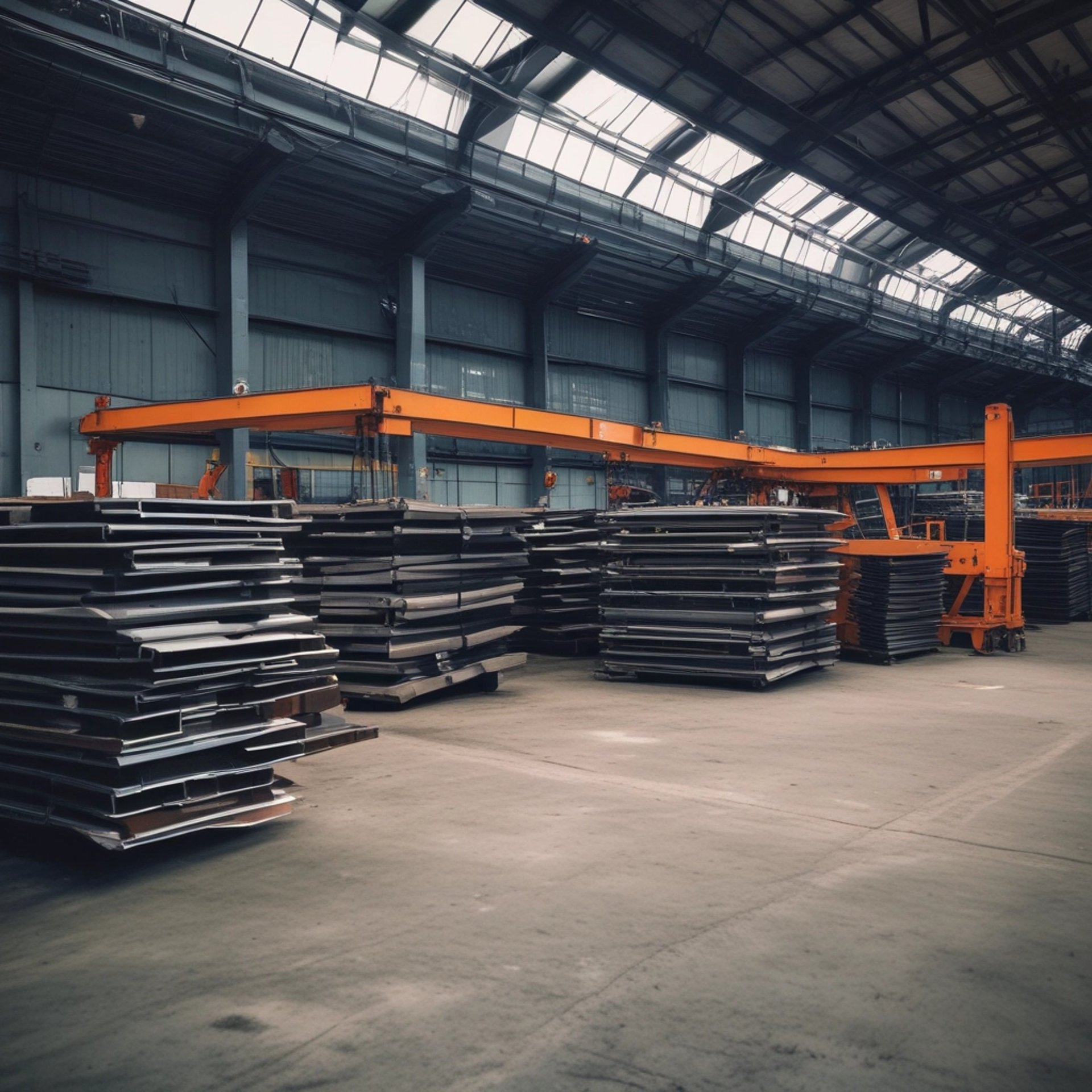
Lifting Magnet Certification
Annual onsite and in-house services for ASME B30.20 compliant magnet testing.
Most customers are pleasantly surprised to find out that most magnets, even very old magnets, pass annual testing.
We provide comprehensive onsite magnet testing services to ensure safety and compliance. Magnets can return to service same-day, minimizing downtime. Depending on quantity, this could be a more cost-effective choice.
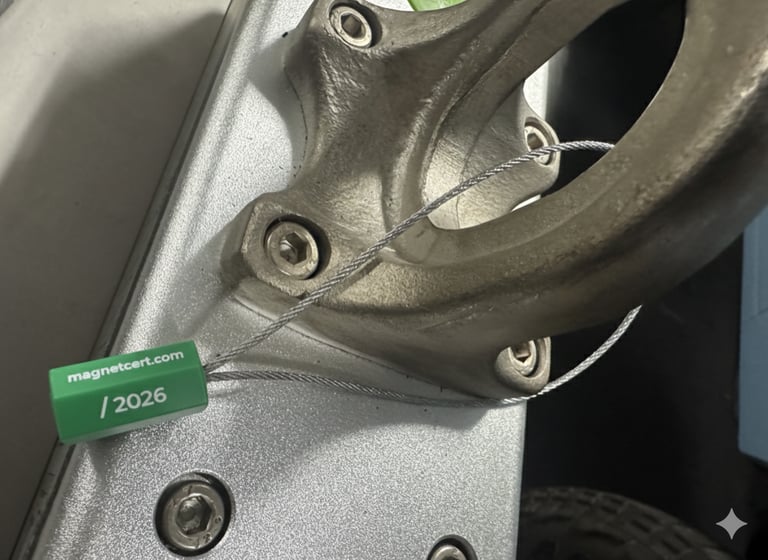
Magnets are tagged for immediate return to service. Audit-Ready Documentation for your safety files follows soon after.
Servicing:
Michigan
Wisconsin,
Illinois,
Indiana,
Ohio and surrounding states.
Extended travel available upon request.
Industries served: Steel mills, steel service centers, custom metal fabrication, metal working, surface grinding, CNC machining, and many more...
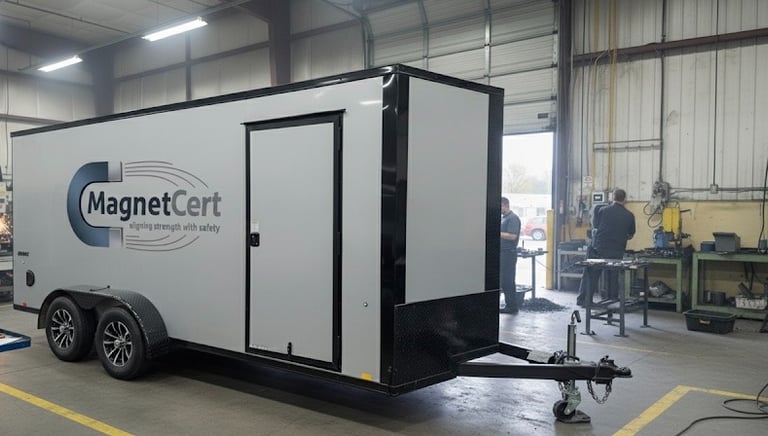
Our internal testing services comply with ASME B30.20 (3:1) standards to ensure dependable results. Magnets can be shipped to our facility for evaluation.
24-hour quote guarantee!
We test all brands.
PO's, ACH payment and Credit Cards accepted.
We will typically test and ship your magnets back to you with documentation within 48 hours. Guaranteed turnaround within 5 working days. Expedited upon request.
If you have (12) magnets or less, this might be the right choice for you.
In-person, same day testing at our facility is available by appointment (Location).
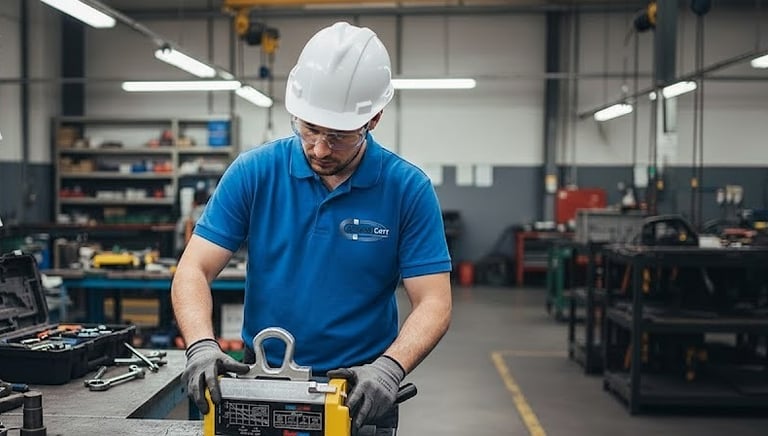
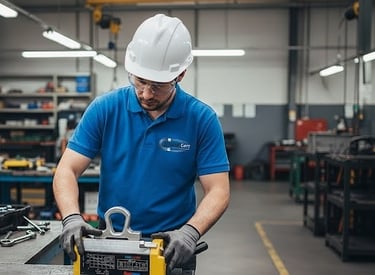
Expert magnet testing, certification and documentation for compliance with industry standards.
Annual Lift Magnet Testing
Overview of the testing process
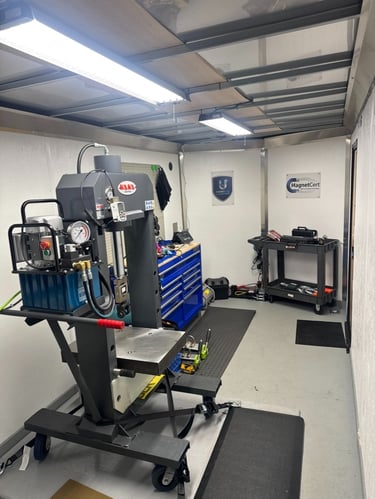
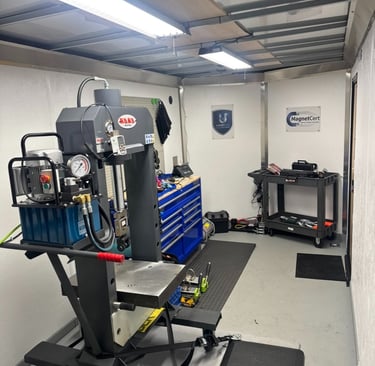
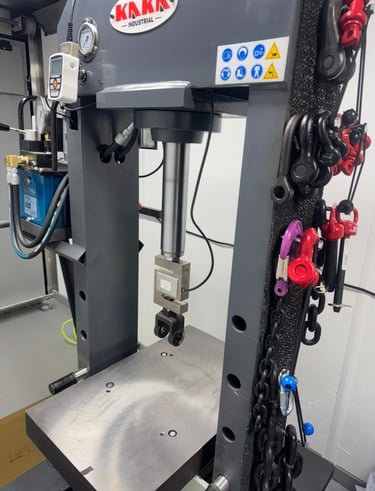
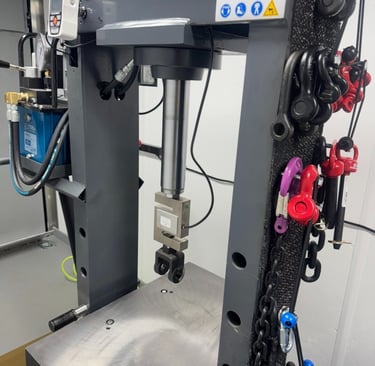
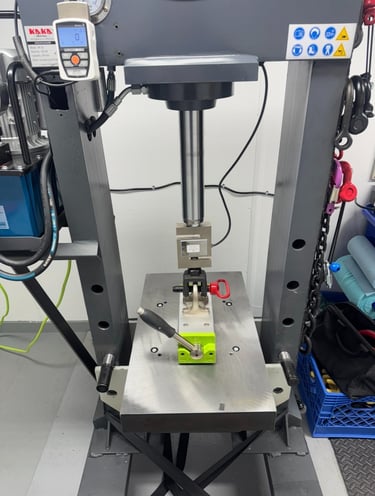
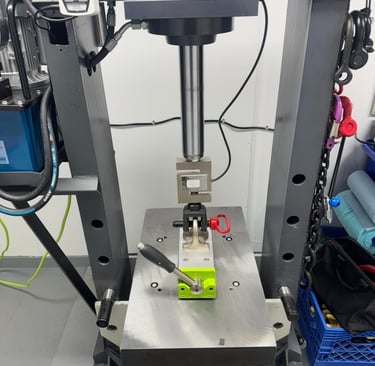
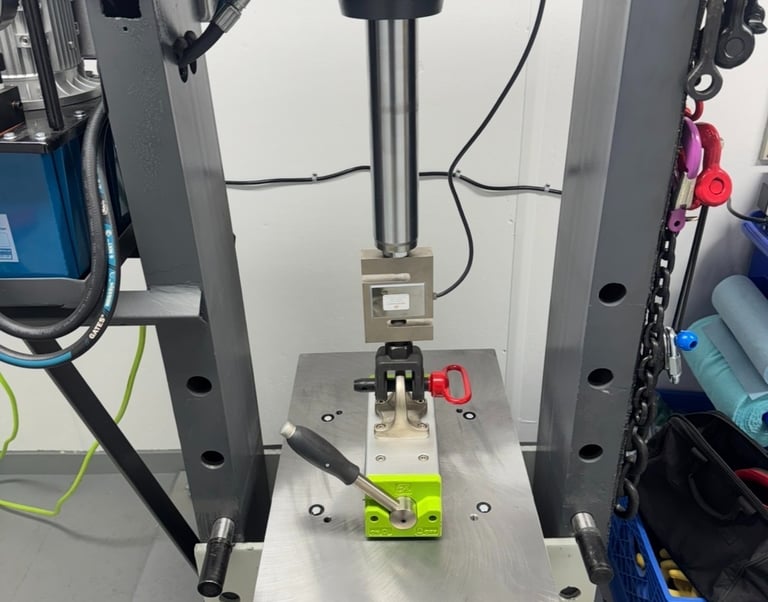
Lift magnet testing and certification involves a breakaway force test to verify the magnet's rated lifting capacity (WLL). Conducted on a specialized test stand with an NIST Traceable load cell to measure the force required to separate the magnet from a standard 3" thick test plate ensuring the magnet is tested against a surface that allows for maximum flux saturation. Testing should be done initially for new, repaired, or altered magnets, and annually thereafter, following ASME B30.20 standards. A thorough visual inspection is also crucial, checking the magnet's lifting lug, release lever, and magnetic surface for damage or corrosion that could compromise its performance. Most customers are pleasantly surprised to find out that most magnets, even very old magnets, pass annual testing.
Types of Testing
Breakaway Force (Load) Test: This is the most critical test, which measures the actual force needed to pull the magnet off a surface. It confirms the magnet meets its stated Working Load Limit (WLL) or rated capacity using an NIST certified load cell.
NOTE: Customers often think "High Gauss = High Lift Power," but that isn't always true. While Gauss measures field intensity at a point, Pull Strength (Breakaway Force) measures the total mechanical holding power which is a better test of true capabilities of the magnet.
Visual Inspection: Conducted before and after testing, this involves checking the magnet for:
Cracked or bent lifting lugs and release levers
Contusions or damage to the magnet's housing
Rust, gouges, or embedded objects on the magnetic surface
Loose or missing bolts, welds, and warning labels
Damage to the epoxy coating on the magnet's surface
Functional Testing: After a visual inspection, the magnet is tested to ensure the lifting mechanism, such as a locking handle or a release lever, functions correctly.
How the Breakaway Test is Performed - ASME B30.20 Standard Test
Clean: Ensure the magnet and test plate surfaces are free of debris.
Position: Center the magnet on an approved test plate surface.
Attach: Connect an NIST certified load cell to the magnet's lifting lug.
Increase Load: A hydraulic pump is engaged to gradually increase the pulling force.
Record & Average: The force at separation is recorded. Multiple tests are performed to get a reliable average reading for the breakaway value.
When to Test
Initially: All new, reinstalled, or significantly altered lift magnets must be tested before being placed into service.
Annually: An annual design factor or breakaway test is recommended to ensure ongoing safety and performance.
Important Considerations
Standards: Testing should comply with relevant standards, such as the ASME B30.20 standards for Below-the-Hook Lifting Devices.
Certified Technicians: Testing should be performed by qualified or certified technicians.
Documentation: Keep detailed records and certificates of all tests performed.
Qualified Person: ASME B30.20-2025 standard does not explicitly mandate that testing must be performed by a "Third Party" (an outside company). However, it does require that testing and inspections be performed by a "Qualified Person" and that certain records be maintained.
In the world of ASME, there is a big difference between a "Designated Person" (someone assigned by the employer) and a "Qualified Person".
1. The "Qualified Person" Requirement
According to the standard, the individual performing the breakaway test must have:
A recognized degree or professional standing.
Extensive knowledge, training, and experience in lifting magnets.
The ability to solve problems related to the subject matter and the work.
Can this be an internal employee? Yes, if your company has the specialized equipment (like a NIST-traceable test stand) and an engineer or technician who meets the "Qualified" definition. However, most facilities lack the specific pull-test stands required to safely measure thousands of pounds of breakaway force, which is why 3rd-party certification is the industry norm.
Industries served:
Steel mills
Steel service centers
Custom metal fabrication
Metal working
Surface grinding
CNC machining,
Welding and many more...
💡 Technical Note: Calibration vs. Certification (Testing)
A common question we receive is: "Can you calibrate my lifting magnet?"
It is important to understand that permanent magnets (food or lifting) cannot be calibrated. Unlike an electronic scale or a pressure gauge, a magnet has no internal settings to "adjust" if its strength has faded.
Testing & Certification: This is the process of measuring the magnet's current performance (Breakaway Force or Gauss) against its original manufacture specs and safety standards (like ASME B30.20). We verify if the magnet is safe for continued use.
The Verdict: If a magnet fails a pull test, it cannot be "turned up" or recalibrated. It must be serviced (if possible) or decommissioned and replaced to ensure operator safety.
In short: We don't calibrate the magnet; we certify its performance to ensure your facility stays compliant and your team stays safe.
💡Compliance Alert:
2026 UPDATE: There are new ASME B30.20 regulations:
With the ASME B30.20-2025 edition being the latest update, revising the 2021 standard and focusing on clarified lifting devices, updated load testing, and new figures for load-containing lifters, reinforcing requirements for proper marking, inspection (visual & frequent), breakaway force testing (3:1 safety factor), and operation of lifting magnets, with compliance being a key OSHA mandate for workplace safety.
Key Updates in ASME B30.20-2025 (and general B30.20 requirements):
New Edition: The latest standard is ASME B30.20-2025, effective in late 2025/early 2026, updating the 2021 version.
Load Testing & Breakaway Force: Magnets must pass rigorous breakaway force tests, with rated loads being a fraction (e.g., <33% for permanent, <50% for electromagnets) of this force, demonstrating a minimum 3:1 design factor.
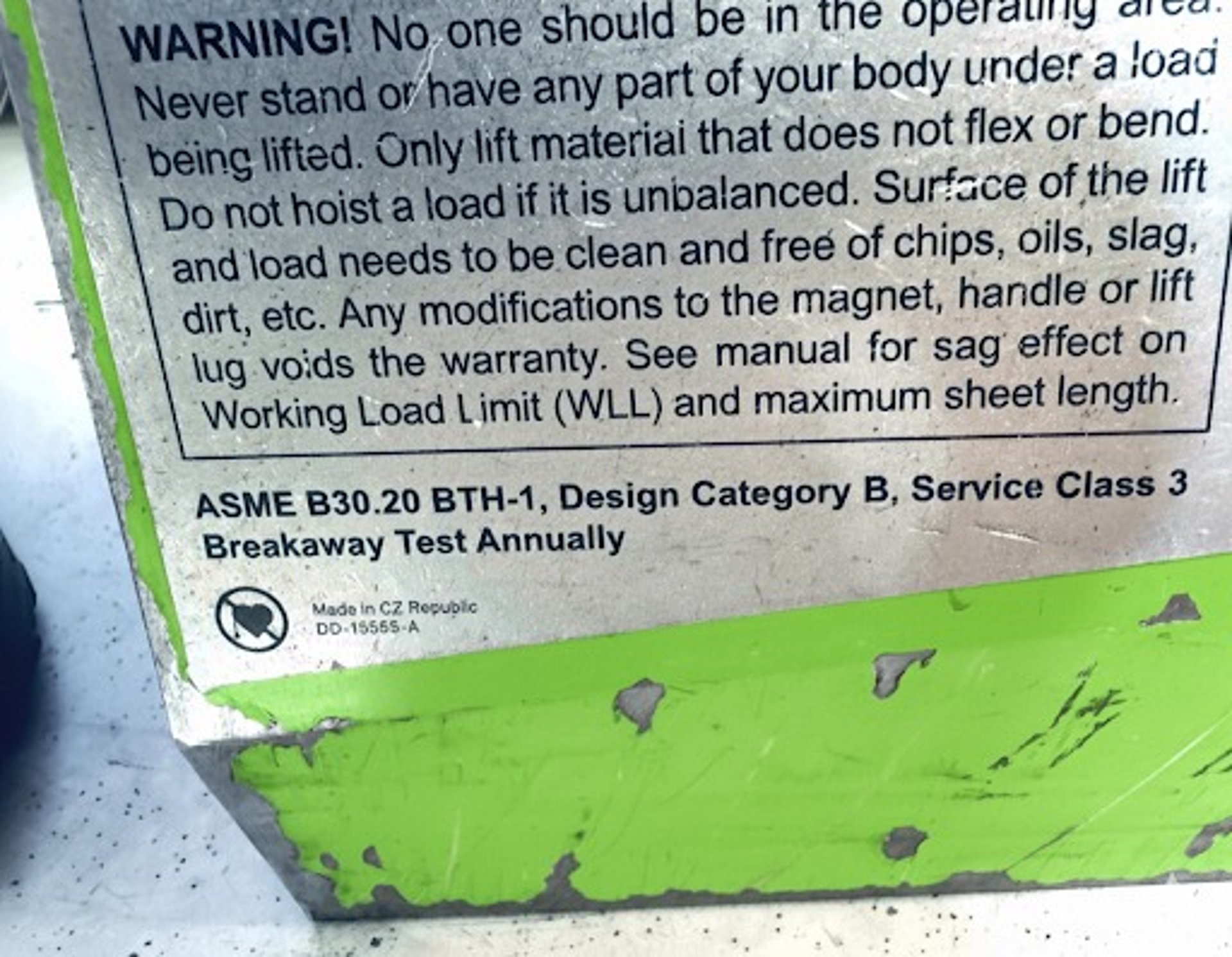
Marking: Clear, permanent marking is required, including manufacturer, serial number, weight (if >100 lbs), rated load, voltage/amps (for electric), and ASME BTH-1 design/service class.
Inspection: Frequent visual inspections (before each shift for certain issues) are mandatory, along with periodic inspections based on service level (normal, heavy, severe).
BTH-1 Design: Design must align with ASME BTH-1, specifying design categories and service classes, crucial for magnet selection and safety.
Scope: The standard covers various below-the-hook devices, including various types of lifting magnets (remote, close proximity, power-lift, electro-permanent).
Key Updates & Your Preventative Maintenance
Reinforced Breakaway Force Testing: The 2025 standard clarifies the crucial 3:1 safety factor for lifting magnets. This means your rated loads must be significantly less than the magnet's actual breakaway force. Regular, documented breakaway force testing isn't just a compliance step; it's a vital preventative measure that ensures your magnets are operating far within their safe limits.
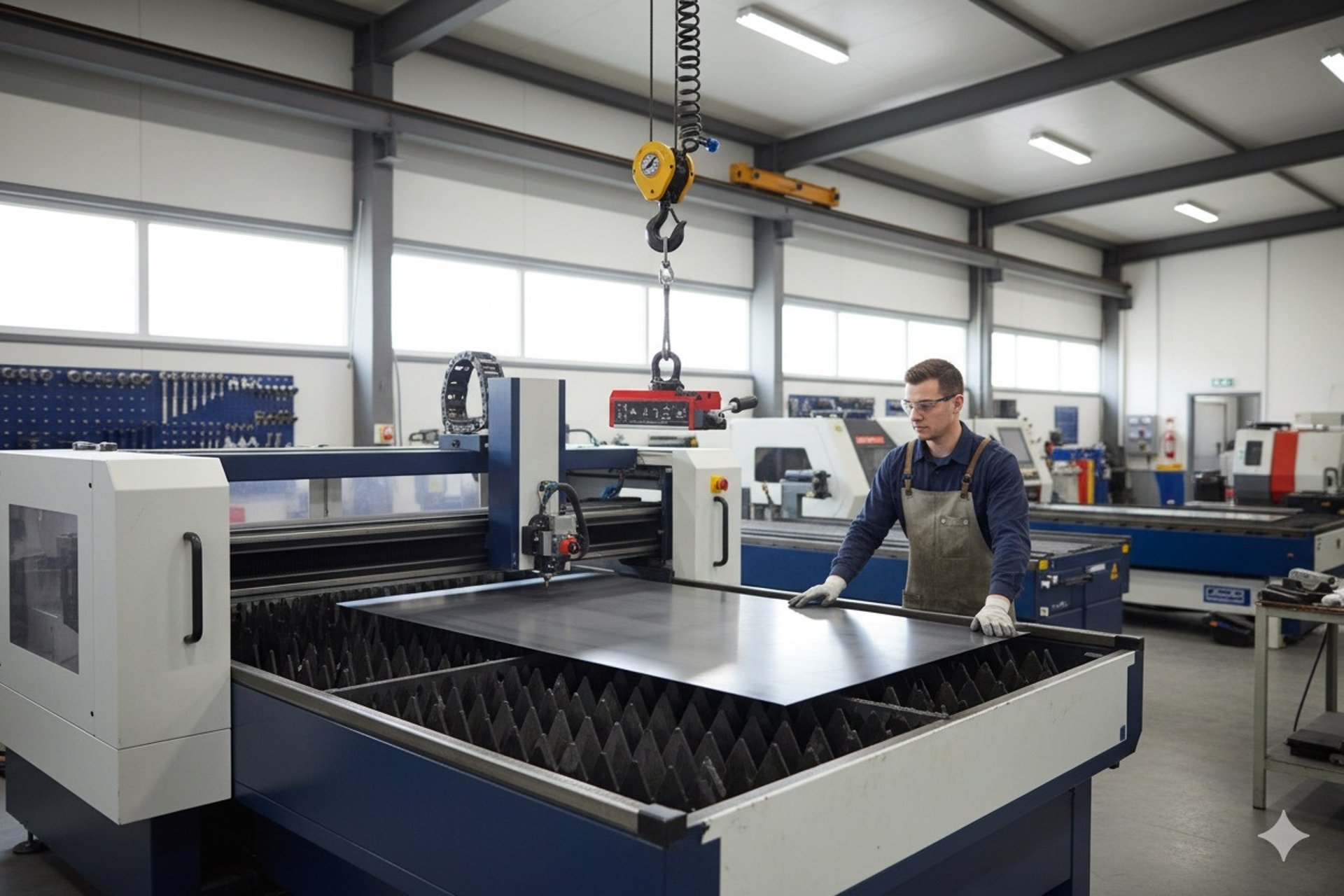
Mandatory Inspections (Visual & Frequent): The emphasis on both "frequent visual inspections" (before each shift for specific issues) and "periodic inspections" based on service level underscores the core of preventative maintenance. This isn't about waiting for a failure; it’s about proactive detection of wear, damage, or degradation before it becomes a hazard. A well-maintained magnet, like the clean and shiny one above, is a safe magnet.
Clearer Marking Requirements: Proper, permanent marking including rated load, serial number, and voltage (for electric) is critical. This helps ensure that the right magnet is used for the right job and that its specifications are always visible. Incorporating this into your preventative checks means verifying markings are legible and accurate.
The standard for below-the-hook lifting devices has changed. With the release of ASME B30.20-2025, the industry is moving toward even stricter oversight of lifting magnets. Whether you use permanent, electro-permanent, or electromagnets, these updates directly affect your daily operations and your annual safety audits.
Why Preventative Maintenance is No Longer Optional The 2025 edition doubles down on the 3:1 safety factor for breakaway force. A magnet that "looks fine" may no longer meet the rigorous testing requirements of the new standard. This is where Preventative Maintenance (PM) becomes your most valuable tool. A clean, shiny, well-maintained magnet isn't just about aesthetics—it's about ensuring the surface contact is perfect to achieve that mandatory breakaway force.
What You Need to Check Now:
Marking & Identification: Is your serial number and rated load still legible?
Inspection Intervals: Are you performing "Frequent" visual checks every shift?
Testing: When was the last time you documented a breakaway force test?
By staying ahead of the ASME B30.20-2025 requirements, you aren't just checking a box for OSHA; you are ensuring that your equipment—and your people—stay safe.
Why It Matters:
OSHA Compliance: While ASME standards aren't law, OSHA recognizes them as accepted industry practice, making adherence crucial for demonstrating due diligence and avoiding liability.
Safety: Following these standards ensures proper design, testing, and maintenance to prevent accidents, especially regarding power failures in electromagnets (requiring backup power/alarms).
In summary, recent updates to ASME B30.20 continue to emphasize strict testing, marking, and inspection protocols for lifting magnets, with the 2025 edition bringing further clarifications and updates to ensure maximum workplace safety.
The 3rd Party Advantage
Why Independent 3rd-Party Certification Matters:
While many facilities attempt to perform in-house magnet testing, an independent audit from MagnetCert provides three critical advantages that internal checks cannot:
Unbiased Objectivity: Auditors (OSHA, ASME) prioritize reports from external specialists. It eliminates the "conflict of interest" and proves your facility is held to the highest external standards.
NIST-Traceable Equipment: We use precision-calibrated Load Cells and indicators. Our tools are certified and traceable, ensuring your data holds up under the strictest regulatory scrutiny.
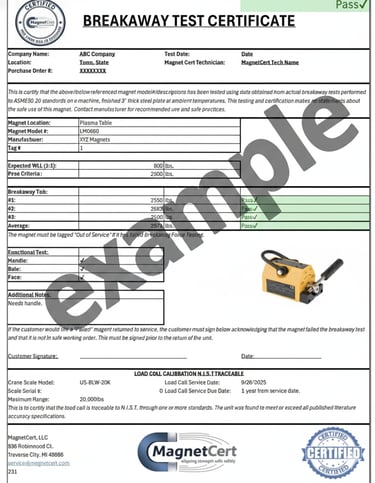
Audit-Ready Documentation: We don't just "test" magnets; we provide the professional certification paperwork that becomes a permanent part of your safety or quality manual. When the auditor asks for proof, you simply hand them the MagnetCert report.
✅ "The Audit Survival Checklist"✅
Is Your Facility Truly "Audit-Ready"? (The Magnet Safety Checklist)
Whether you are moving steel or processing flour, your magnets are your "silent guardians." But when was the last time they were truly verified? Use this quick checklist to see if you're prepared for your next inspection:
✅ The Paper Trail: Do you have a certificate for every magnet on the floor dated within the last 12 months?
✅ Calibration Proof: Can you prove the equipment used to test your magnets was itself calibrated and certified?
✅ Standard Compliance: Are your lift magnets tested to ASME B30.20 standards, or are you just "guessing" their breakaway strength?
✅ Physical Integrity: Have you checked for "dead spots," housing cracks, or weld fatigue that a simple visual check might miss?
✅ Third-Party Validation: If an auditor asks why you believe your magnets are safe, is your answer "because we checked them ourselves" or "because they were certified by MagnetCert"?
Don’t leave your compliance to chance. Aligning Strength with Safety!®
If you are unsure of your exact needs, please feel free to contact us. We're happy to help, and phone consultations are always free.
Schedule Breakaway Testing
For inquiries about lift magnet testing services, please fill out the contact form below.
Lift Magnet Testing FAQs
What is lift magnet testing?
Lift magnet testing ensures the safety and reliability of lifting magnets used in various applications. Verifying 3:1 breakaway to ASME B30.20 standards.
Why is ASME B30.20 important?
ASME B30.20 provides standards for the design, maintenance, and testing of lifting magnets to ensure safety.
What services do you offer?
We offer mobile onsite and in-house lift magnet testing services, adhering to industry standards for quality and safety. We take pride in educating your staff on the services we offer.
You can reach us through our comprehensive form by clicking here.
Do you provide certificates upon completion?
Yes, we provide certificates for your files upon successful completion of lift magnet testing according to ASME standards. Failed magnets will be tagged and pulled from service.
What are the testing procedures?
Our testing procedures include visual inspections, functional tests, and adherence to (3:1) Breakaway ASME B30.20 standards for safety.
Can my magnets be calibrated?
It is important to understand that permanent magnets (food or lifting) cannot be calibrated. Unlike an electronic scale or a pressure gauge, a magnet has no internal settings to "adjust" if its strength has faded.
Contact
Get in touch for magnet testing services.
Service:
Phone: 231-493-7934 Call or Text
© 2026 MagnetCert all rights reserved.


18+ Years Industry Experience
PO's, ACH payment and Credit Cards accepted.