🚨On the road 2/16/2026: Traverse City, MI - Grand Rapids, MI - Lansing, MI 🚨
Get on route! Save on service!

"Permanent" Magnets Fail: The 5 Silent Killers of Industrial Safety
Is your safety equipment failing without you knowing? From welding interference to thermal shock, discover the 5 hidden threats that degrade magnet strength and how to prevent them.
MagnetCert
12/22/20252 min read
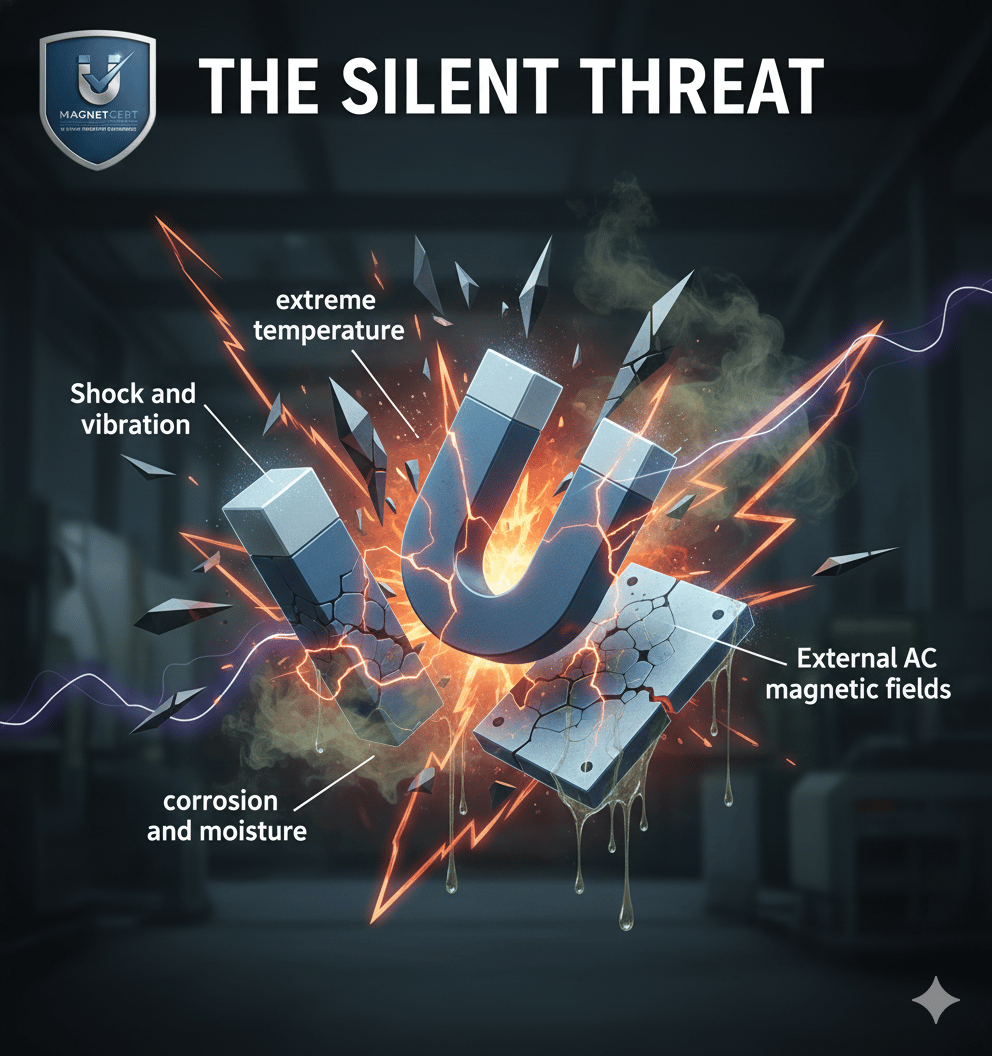
The Silent Threat: 5 Hidden Ways Your "Permanent" Magnets Are Losing Power
It's one of the most common—and dangerous—misconceptions in manufacturing: "My magnets are permanent, so they'll last forever."
While true that industrial magnets retain magnetism for a very long time, in a harsh factory environment, they are under constant attack. Everyday operational stresses can subtly but surely degrade their strength, leading to what we call "silent failure."
When a magnet loses power without anyone noticing, your entire safety barrier is compromised. Metal contamination becomes a real risk in food processing, and a dropped load becomes a terrifying possibility in lifting applications.
At MagnetCert, we've seen it all. Here are the 5 most common "magnet killers" lurking in your facility:
1. The Heat is On: Temperature Extremes
Magnets have a maximum operating temperature. Exceed that, even occasionally, and you start to demagnetize them permanently. Imagine a magnet in a high-heat drying process or near a furnace. Over time, that continuous exposure "cooks" the magnetism right out of the material, significantly reducing its pull strength.
2. The Impact Zone: Shock and Vibration
Every bump, jolt, or constant vibration on a conveyor line takes its toll. Mechanical shock can physically disrupt the internal alignment of a magnet's domains, causing micro-fractures or re-orientations that weaken its overall field. Over time, a heavily vibrated magnet will simply not perform to its original specifications.
3. The Slow Killer: Corrosion and Moisture
While most industrial magnets are housed in stainless steel, moisture infiltration can still occur. If water, chemicals, or even high humidity seeps inside, it can cause the magnetic materials (especially rare-earth magnets like Neodymium) to oxidize. This internal corrosion literally turns the powerful magnetic material into a weaker, powdery substance, leading to a dramatic loss of strength.
4. The Accidental Demagnetizer: Welding and AC Interference
This is one of the most common ways magnets are ruined in a maintenance shop. If a worker performs arc welding near a magnet—or worse, uses the magnet’s housing as a ground—the strong alternating current (AC) passing through the metal can scramble the magnet's internal alignment. This process, similar to how industrial degaussers work, can strip a magnet of its strength in seconds. Always ensure magnets are removed or shielded before any welding occurs on nearby equipment.
5. The "Empty Shelf" Syndrome: Improper Storage
Even when not in use, magnets need care. Storing them improperly (e.g., stacked haphazardly, without keeper bars, or in areas with fluctuating temperatures) can contribute to slow demagnetization. Magnets like to be "closed-loop" when not in operation; leaving them exposed can accelerate strength loss.
Don't Let "Permanent" Become "Problematic"
The key takeaway is this: "Permanent" does not mean "invincible." In fact, it means you need to be more vigilant because their degradation is often invisible until it's too late.
If you haven't had your industrial magnets professionally pull-tested and certified within the last year, you are operating on a dangerous assumption. Protect your product, your people, and your reputation by knowing the true strength of your safety systems.
Ready to Uncover Your Hidden Risks?
Let MagnetCert perform a comprehensive pull test on your critical magnets. We'll identify any "silent failures" and provide the certification you need for complete peace of mind.

Contact
Get in touch for magnet testing services.
Service:
Phone: 231-493-7934 Call or Text
© 2026 MagnetCert all rights reserved.



18+ Years Industry Experience
PO's, ACH payment and Credit Cards accepted.