🚨On the road 2/16/2026: Traverse City, MI - Grand Rapids, MI - Lansing, MI 🚨
Get on route! Save on service!

Pull Testing vs. Gauss: Why Physical Validation Matters for Magnet Compliance
Understand the critical difference between magnetic flux and actual holding power. Discover why MagnetCert prioritizes calibrated Pull Testing to ensure your industrial magnets meet 2026 safety standards.
MagnetCert
1/1/20262 min read
Why the Pull Test is the Gold Standard for Real-World Magnet Safety
If you ask a physicist how to measure a magnet, they’ll reach for a Gauss meter. But if you ask a safety inspector or a plant manager how to ensure a load won't drop or a metal fragment won't pass through a line, they’ll reach for a Pull Test kit.
At MagnetCert, while we use various tools, we believe the Pull Test is the most critical measurement for true operational safety. Here’s why the Pull Test remains the superior method for validating your equipment.
1. It Measures "Working Strength," Not Just Flux
A Gauss meter measures the magnetic field at a microscopic point. However, a high Gauss reading doesn't always guarantee that a magnet will actually catch a moving piece of metal.
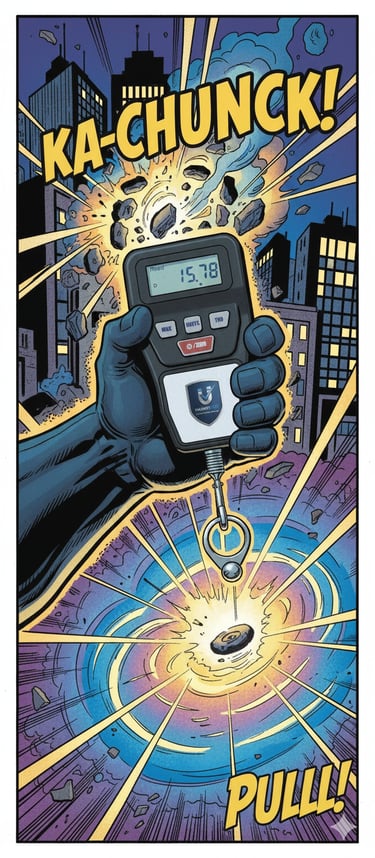
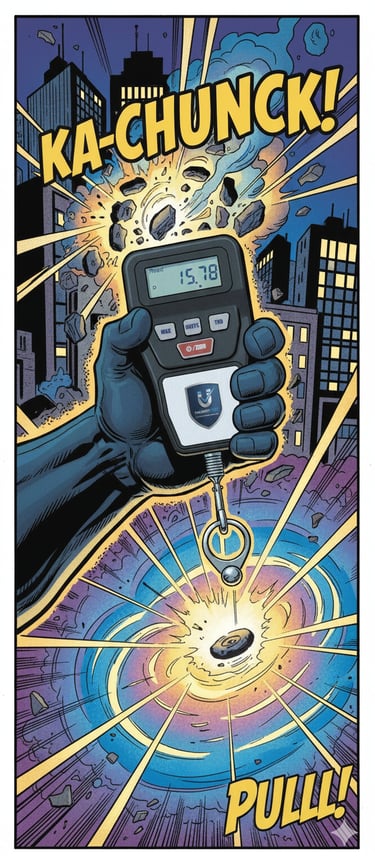
The Pull Test measures the actual force required to separate a standardized steel piece from the magnet. It simulates the real-world "work" the magnet has to perform. It tells you exactly how much "grip" your equipment has—which is the only metric that matters when safety is on the line.
2. Repeatability and Physical Proof
One of the reasons auditors and safety managers trust the Pull Test is its physical nature. It provides a tangible measurement of resistance.
The "Breakaway" Point: The exact moment the test piece separates from the magnet provides a clear, undeniable threshold of performance.
Standardization: By using certified test balls and calibrated scales, we remove the guesswork. We aren't just looking at a digital number on a screen; we are measuring physical force.
3. Identifying Structural Integrity
A magnet might have a decent Gauss reading but be structurally failing or poorly seated in its housing. A Pull Test puts the entire assembly under a slight stress load. If there is a mechanical failure or the magnet has shifted, the Pull Test will reveal it immediately, whereas a Gauss probe might miss it.
4. Meeting the "Holding Power" Requirement
In lifting applications especially, "Holding Power" is the legal requirement. Standards (like those from ASME) are built around the magnet's ability to lift a specific weight—usually with a safety factor of 3:1. A Gauss meter cannot tell you if a magnet will lift 2,000 lbs; only a certified Pull Test can verify that capacity.
The MagnetCert Approach: Performance-First Validation
We don't just want to tell you your magnets are "on." We want to prove they are strong enough to protect your product and your people. By focusing on rigorous, calibrated Pull Testing, we provide you with a certificate of performance that stands up to the toughest inspections.
Don't Guess Your Holding Power. Know It.
Is your magnet actually capable of doing its job? Let MagnetCert provide a definitive, physical validation of your equipment's strength.

Contact
Get in touch for magnet testing services.
Service:
Phone: 231-493-7934 Call or Text
© 2026 MagnetCert all rights reserved.



18+ Years Industry Experience
PO's, ACH payment and Credit Cards accepted.